In the Spirit of Saint Junípero Serra

By CHRISTIAN CLIFFORD

(originally published June 2018 in NUESTRA PARROQUIA–A Claretian Publication)

Bishop Robert McElroy of the Diocese of San Diego a “foundational figure” of the Golden State. Not everyone admires Serra, though. To some Junípero Serra is synonymous with the negative outcomes of Spanish colonialism, though the historical record proves otherwise (the Church collected 2420 documents—7500 pages total—of Serra’s writings and 5000 pages of materials written about him from those who knew him, and testimony of people inspired by his life). As Pope Francis shared in the homily at Junípero Serra’s canonization on September 23, 2015 in Washington, D.C., “Today, like him [Saint Junípero Serra], may we be able to say: Forward! Let’s keep moving forward!” His life can help one to proclaim the Gospel with joyful hearts, amid the many challenges. Saint Junípero Serra traversed an estimated 24,000 miles to share the Gospel message, some of it walking and in great pain.
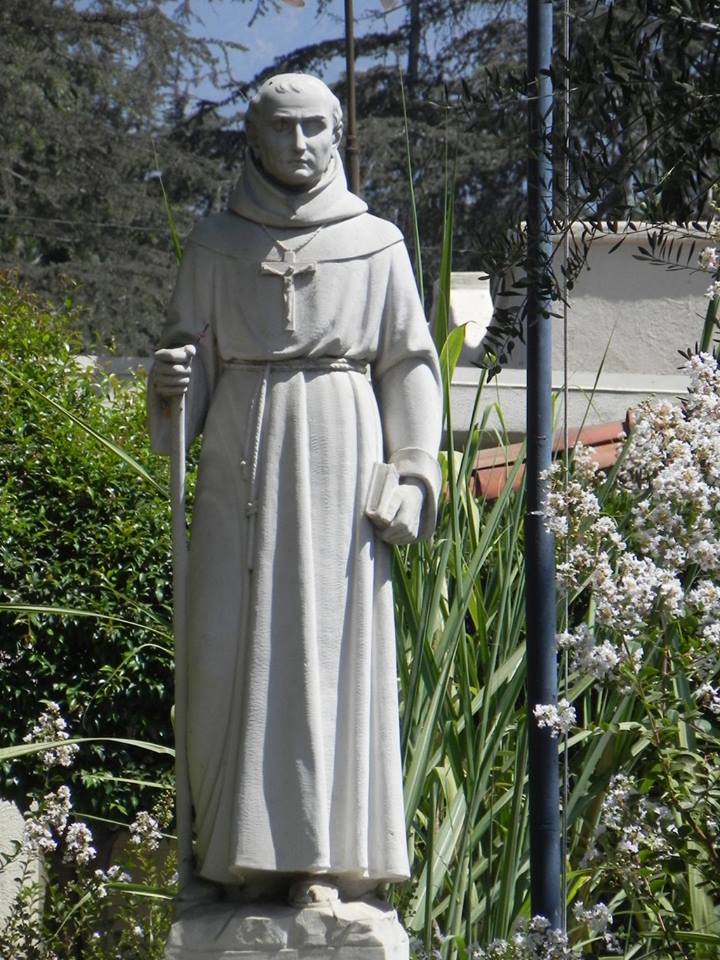
Saint Junípero Serra (1713-1784) came from humble beginnings. Born and raised in Petra, Mallorca, Spain, he responded to God’s call and was ordained a priest in the Franciscan order in 1737. From 1740-1749 he lived a comfortable life as a university professor. But he discerned, or recognized, that it was not the life God was calling him to and in 1749 he made the arduous journey to Mexico City. For the next twenty years he served the Christian Indians north of Mexico City. In 1769, he finally was given the chance to do what he had wanted to do for so long, be a missionary priest to the gentile. 

The government of Spain wanted to keep Russia and Britain out of the lands they claimed, so they organized an expedition, intent on populating what is now the state of California with Spanish citizens. The Sacred Expedition had five detachments–three by sea and two by land. The one with the military and spiritual leaders, Captain Gaspar Portolá and Father Junípero Serra, left Loreto, Baja California, by land on March 28 and reached San Diego Bay on July 1, 1769. The Sacred Expedition had 238 men, seventy-eight of whom were soldiers.

In 1776, two-hundred-forty settlers traveled from Mexico to colonize San Francisco. Priest, soldier, and colonist were surrounded by an estimated 300,000 Indians. The Spaniards never came into contact with the vast majority of the independent Indians who lived outside the Spanish sphere of influence. In 1790, just over two decades after Serra founded the first mission in present-day California at San Diego, eleven missions and four presidios had been constructed, with an estimated 30 priests and 211 soldiers. By the time the last mission closed its doors in 1836, due to the Secularization Law passed in 1834 by the Mexican Congress, 142 Franciscan priests had ministered in Alta California. Only two of these priests were killed at the hands of natives (Luís Jayme at San Diego in 1775 and Andrés Quintana at Santa Cruz in 1812).

How is God calling you to share His joy with others? Invite Saint Junípero Serra on your journey to discern how you can be, as Pope Benedict XVI put it in God is Love, “. . . fountains of living water in the midst of a thirsting world.”

Christian Clifford writes on the subject of Catholic Church history in Spanish and Mexican California. His latest book is the Catholic Media Association Book Award recipient Pilgrimage: In Search of the REAL California Missions, the story of his 800-mile walk of the California Missions Trail. He can be reached at www.Missions1769.com.
Catholics (and people of good will) should not fear Junípero Serra High School’s name change

The year 2020 was a tough one, even for a Catholic saint. Junípero Serra, the 18th-century Spanish priest who Pope Francis called “the evangelizer of the west in the United States”, has been taking it in the chin lately. Vandalism of public statues of Junípero Serra have taken place by angry mobs and desecrated on Catholic church property. The latest attack was a character assassination of him by the San Francisco (California) Board of Education’s School Renaming Committee calling him a “Colonizer and slaveowner” (see Jan. 28, 2021 Mission Local article here). No evidence was provided. No historians questioned. This begs the question, will 2021 be any better for Serra? Things looked up for friends of Serra when the head of the man who brought revolutionary ideas to this part of the world was taken off the proverbial chopping block by the San Francisco Unified School District. However, the executioners in San Diego were successful in stripping his name from a public high school. Little did they know that they did so almost to the day 248 years after Serra demanded justice for indigenous people (on March 13, 1773, after Serra’s lobbying, Viceroy Antonio María de Bucareli y Ursúa signed into law the Representación). 

There is no denying that cultural exchange came at a cost. Pre-contact with Europeans, the California Indian population was estimated to be 300,000. Historian James A. Sandos argued in Converting California that the overall population dropped 21 percent by 1830, just before Mexico took possession of California. Regarding the Indians in the area of mission influence, he notes from 1770-1830, the population declined from 65,000 to 17,000, a loss of 74 percent. Scholar Barry Pritzer estimates by the end of the 19th century there were 15,000 California Indians.  Therefore, the near annihilation of the California Indians came during the Gold Rush from the 49ers and with the blessing of the government of California. Serra, wrongly, is the poster boy for all of this to some. 

Serra did not want pueblos, because he knew the history of the encomienda system. He wrote to medical authorities asking how to help sick Mission Indians (the vaccine for smallpox was introduced in 1796 by Jenner and the horrid disease was not even eradicated until December 1979). Serra, nearly dying along the way, went to the viceroy in Mexico City to lay out his frustrations regarding the maltreatment of natives by soldiers.  On March 13, 1773, Serra and Viceroy Antonio María de Bucareli y Ursúa signed into law the Representación that included disciplinarian measures for Mission Indians be put in the hands of the priests, not the military. Serra also taught the Mission Indian in Spanish due to the fact that they came from tribelets that spoke different languages. What he wanted for them to believe about each other was what he believed about them, as captured in his February 26, 1777 letter to Father Francisco Pangua, O.F.M., his guardian in Mexico City: “They are in places one cannot visit without walking a long distance and sometimes going on hands and feet, but I put my trust in the Lord, who created them.”

When it comes to Serra, the Catholic Church is confident of his noteworthiness.

His life has been studied and researched with a fine-tooth comb. The ecclesial court proceedings to question Serra’s holiness began on December 12, 1948. The evidence brought forth were 2,420 documents (7,500 pages total) of Serra’s writings, 5,000 pages of materials written about him from those who knew him, and testimony of people inspired by his life. A summary of findings would be collected into the Positio (position paper)—Serra’s position was 1,200 pages. The evidence propelled Pope Francis to canonize Serra on September 23, 2015 in Washington, D.C. 

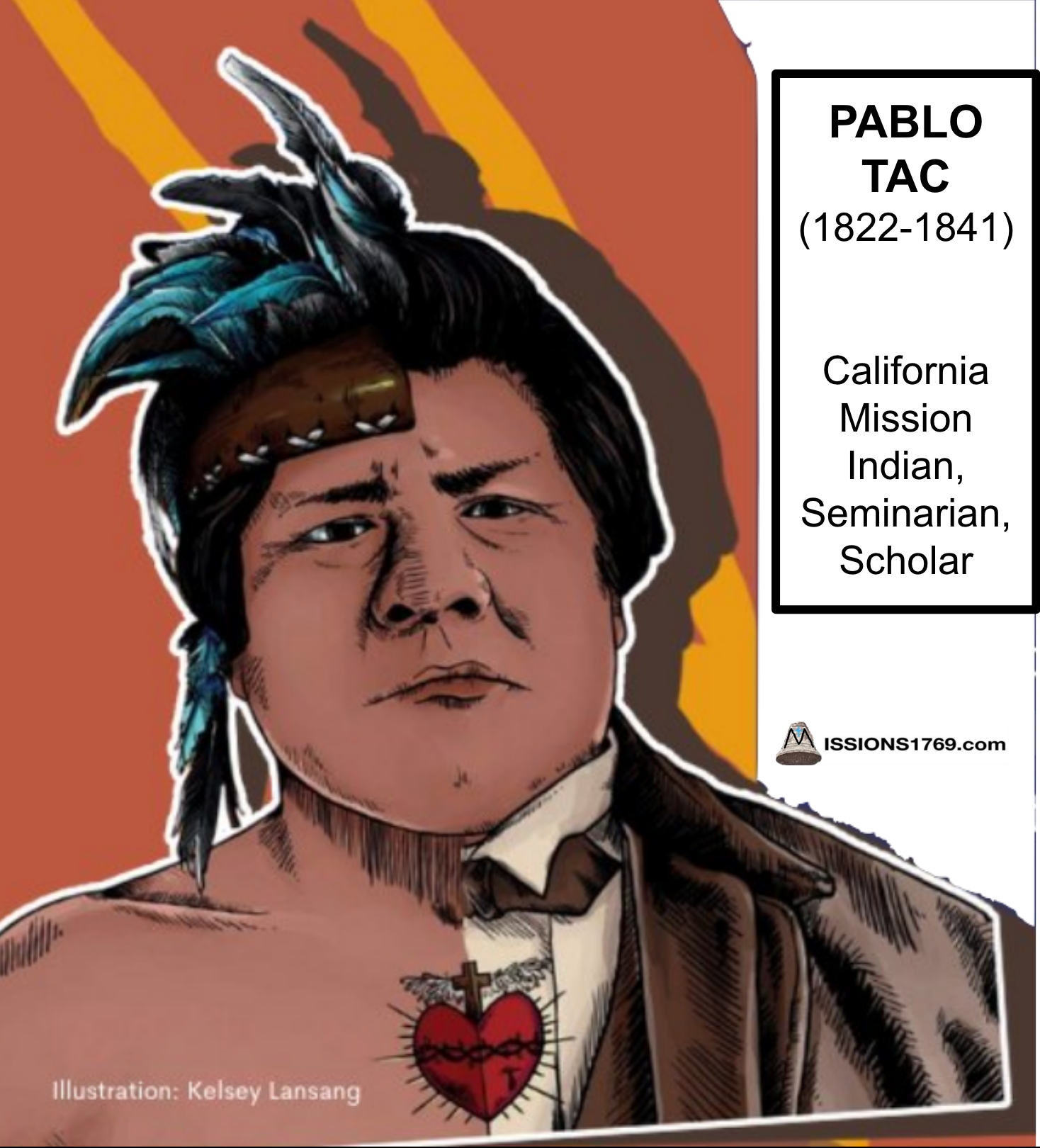
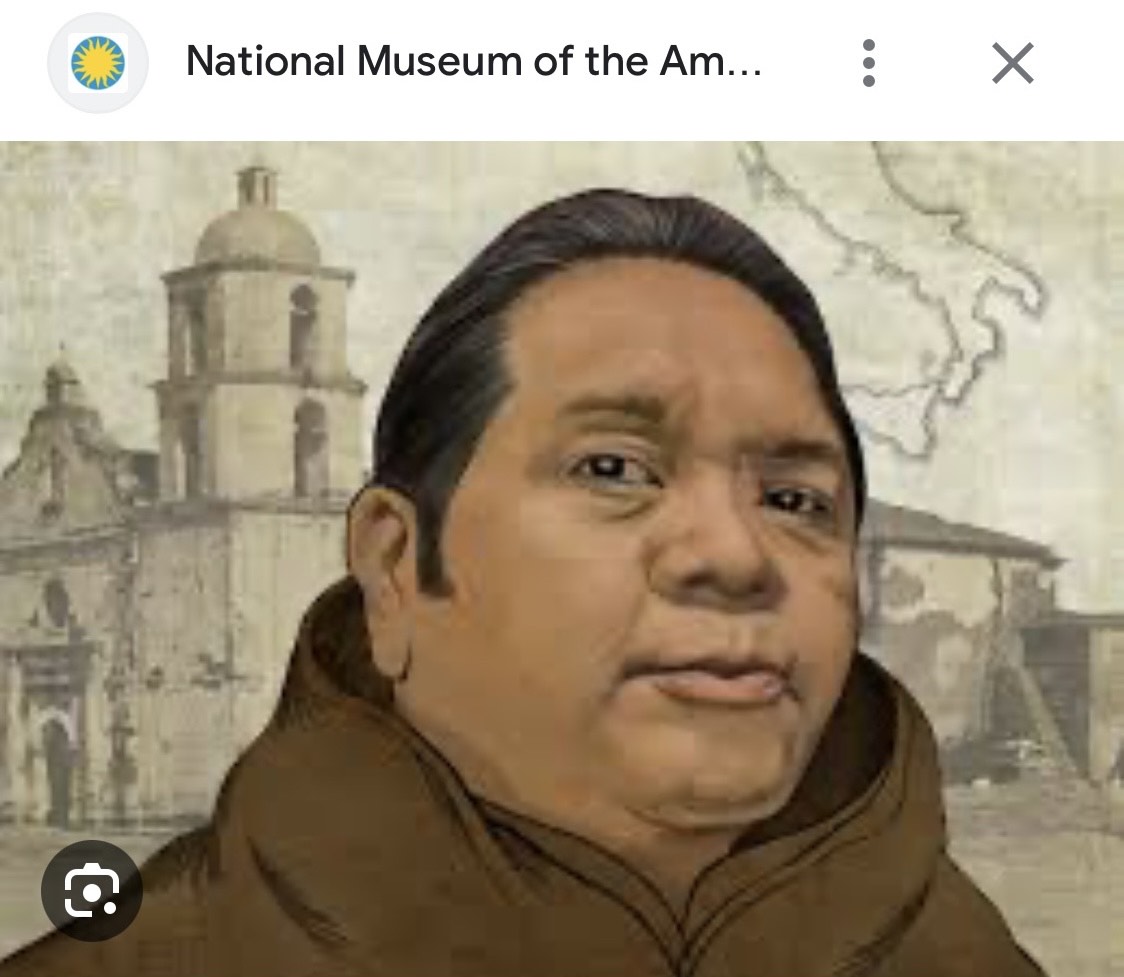
I propose to those who wanted Serra High School’s name changed rename it after a significant California Indian. Pablo Tac comes to mind. Never heard of him? That is a shame. His story should be taught to every school child in California. His writings are the earliest from a California Indian, written in Rome while a seminarian. The greatest recommendation I can make is to read online (free) the Writings of Junípero Serra to better understand what his vision was, motivations were, as well as his challenges, dreams, and successes.

_________

Christian Clifford is the author of books about Catholic Church history in Spanish and Mexican California. His latest, Pilgrimage: In Search of the Real California Missions, is about his 800-mile walk of the California Missions Trail. He can be reached at www.Missions1769.com.

_________

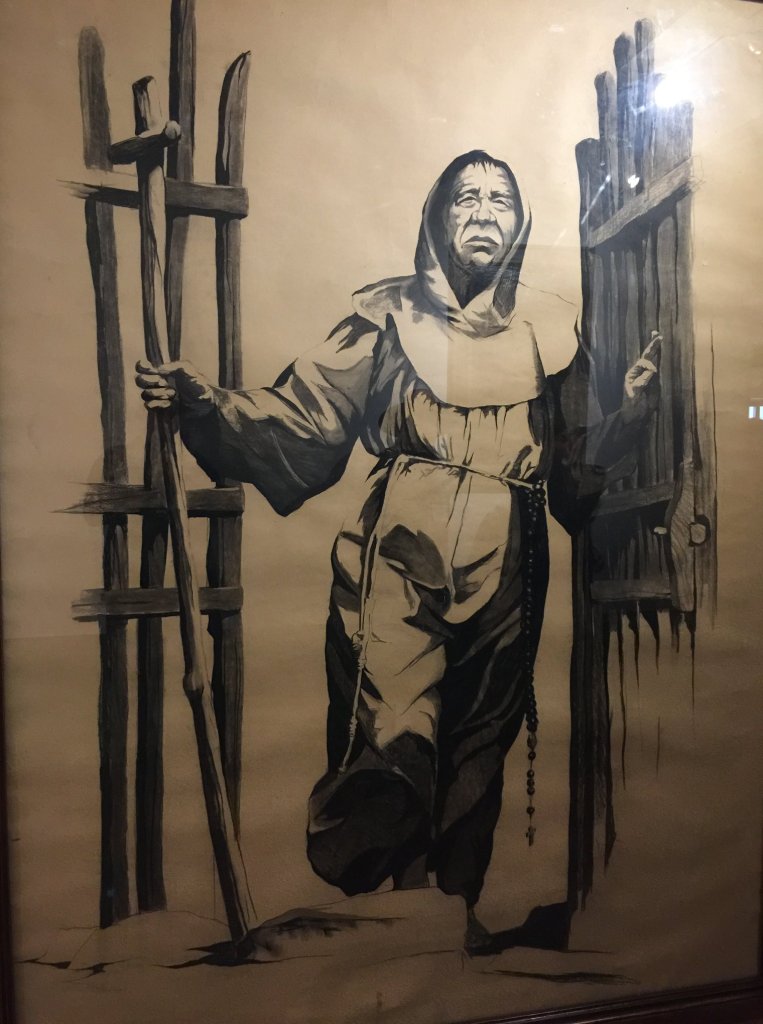
Image: Father Junipero Serra by Paul Whitman, 1933.

Resources: St. Junípero Serra & California mission history

I hope the resources on my website will help you learn about and teach this chapter in California history. It is by an educator who learned a lot by writing four books and articles about colonial California.

Included on my Resources page:

  • 10 Facts about Saint Junípero Serra
  • Discerning the Spirit of Saint Junípero Serra
  • Native Catholic Voices
  • Missions Timeline
  • Further Reading
  • Petition4PabloTac: Mission Indian, seminarian, scholar
  • Virtually visit the California missions on Missions1769 Flickr page.

¡Siempre adelante y nunca para atrás!

#GoGoStJunipero #PabloTacPray4Us #Forwardinmission

Pablo Tac Resources

PETITION

All are welcome to read, sign, and share the petition to nominate Pablo Tac for the cause of canonization at change.org/InvokePabloTac. #PabloTacPray4Us

BOOKS

Clifford, Christian. Meet Pablo Tac: Indian from the Far Shores of California. North Charleston, SC: CreateSpace, 2017.

Haas, Lisbeth. Pablo Tac, Indigenous Scholar: Writing on Luiseño Language and
Colonial History, c.1840. Berkeley: University of California Press, 2011.

Tac, Pablo. Pablo Tac, Conversion of the Saluiseños of Alta California (Conversión de los Saluiseños de la Alta California) (Rome, c. 1840), translated by Damian Bacich, San José State University, 2020.

ARTICLES

Clifford, Christian. “PABLO TAC: California Mission Indian, Seminarian, Scholar, and Saint-in-Waiting”, Boletín, Vol. 38, 1, 2022.

“Oceanside school named after Pablo Tac” in The San Diego Reader

“Get to Know Pablo Tac: A Remarkable Catholic American Indian” in Catholic Exchange

“Unveiling Potential Saints for the Americas” in The National Catholic Register

“‘Blueprint for Sainthood’ Seen in Native American Lives, Martyrdoms” in The National Catholic Register

“Catholic Educator and Author Campaigns for Remarkable, Holy California Mission Indian” in OsideNews

“You know of Junípero Serra but have you heard of Pablo Tac?” in Aleteia

INTERVIEWS

The powerful witness of Native American Catholics on CNA Newsroom.

VIDEOS

James Luna, Chapel for Pablo Tac, National Museum of the American Indian

Tac on TikTok @ youtu.be/UPwVtyUcODM

Introduction to Pablo Tac: California mission Indian, seminarian, and scholar @ youtu.be/DXhYcUFe3bg.

Dr. Kevin Schmiesing, Church historian and author, spoke about Pablo Tac on The Son Rise Morning Show

Pablo Tac Icon, By the hand of Andre J Prevost

​Commissioned by St. Thomas Aquinas Regional Secondary School,
North Vancouver, BC, Canada

Pablo Tac on CNA Newsroom

FOR IMMEDIATE RELEASE

Contact: missions1769(at)gmail(dot)com

Website: www.Missions1769.com

Story of California mission Indian Pablo Tac shared on award-winning podcast CNA Newsroom

San Mateo, CA — Christian Clifford, veteran Catholic school educator, has been on a quest to get the word out about Pablo Tac (1822-1841). He recently did just that while a guest on CNA Newsroom, an award-winning podcast of EWTN News, part of the largest religious media network in the world.

Pablo Tac was Luiseño Indian. He was born and raised at Mission San Luis Rey de Francia, located in present-day Oceanside, California. At the age of ten, he left the Mission with Fr. Antonio Peyrí and another Luiseño boy, Agapito Amamix. Their destination was Rome. On September 23, 1834, Pablo and Agapito enrolled at the Urban College. There they learned how to be missionary priests, hoping to one day return home to minister to their fellow Luiseño. 

Clifford, author of the only popular biography about the Mission Indian youth, Meet Pablo Tac, hopes that bringing attention to Pablo Tac will lead to more research being done. He believes there must be more to discover about him beyond what we know. 

Pablo Tac’s writings are the earliest from a California Indian. While in Rome studying for the Catholic priesthood, Pablo wrote a description of life as a mission Indian (“Conversion of the San Luiseños of Alta California”, c. 1835), gave a public recitation of a poem at the Polyglot Academy (c. January 1836), in Sequoyahesque fashion created a dictionary of the language of his people (“Prima Linguae Californiensis Rudimenta a P. Tak proposita”, c. February 1838), and wrote an account of the native peoples in Southern California (“De Californiensibus”, c. after 1838). 

Clifford realizes that unlike the first North American Indian saint, Kateri Tekakwitha (1656-1680), Pablo is little known. That does not seem to slow him down, though. He was overjoyed when he met Catholic Luiseños in July 2019 at the Tekakwitha Conference in Sharonville, Ohio who are aware of Pablo and follow in his footsteps. Also, a hall at Mission San Luis Rey was named after Pablo in 2012 and in June 2021 it was decided that an Oceanside public elementary school will take his name. He is confident that once people are made aware of his short life that it inspires, as attested by the over 500 Catholics and people of good will who have signed the petition to nominate Pablo Tac for the cause of canonization (an electronic version of the petition can be found at www.change.org/InvokePabloTac). The campaign has not yet received the support of the San Luis Rey Band of Mission Indians or the Diocese of San Diego.

Clifford, who finished walking the 800-mile California Missions Trail in the summer of 2020, made it a point to pray to and draw inspiration from Pablo Tac. He shares, “Pablo has the power to move hearts and minds.”

Listen to the podcast “Ep. 117: The powerful witness of Native American Catholics” at https://soundcloud.com/cnanewsroom. For more information about Christian Clifford, visit www.Missions1769.com. For a brief video on the life of Pablo Tac, go here.

###

Junipero Serra: Created to Amaze

dscn2962
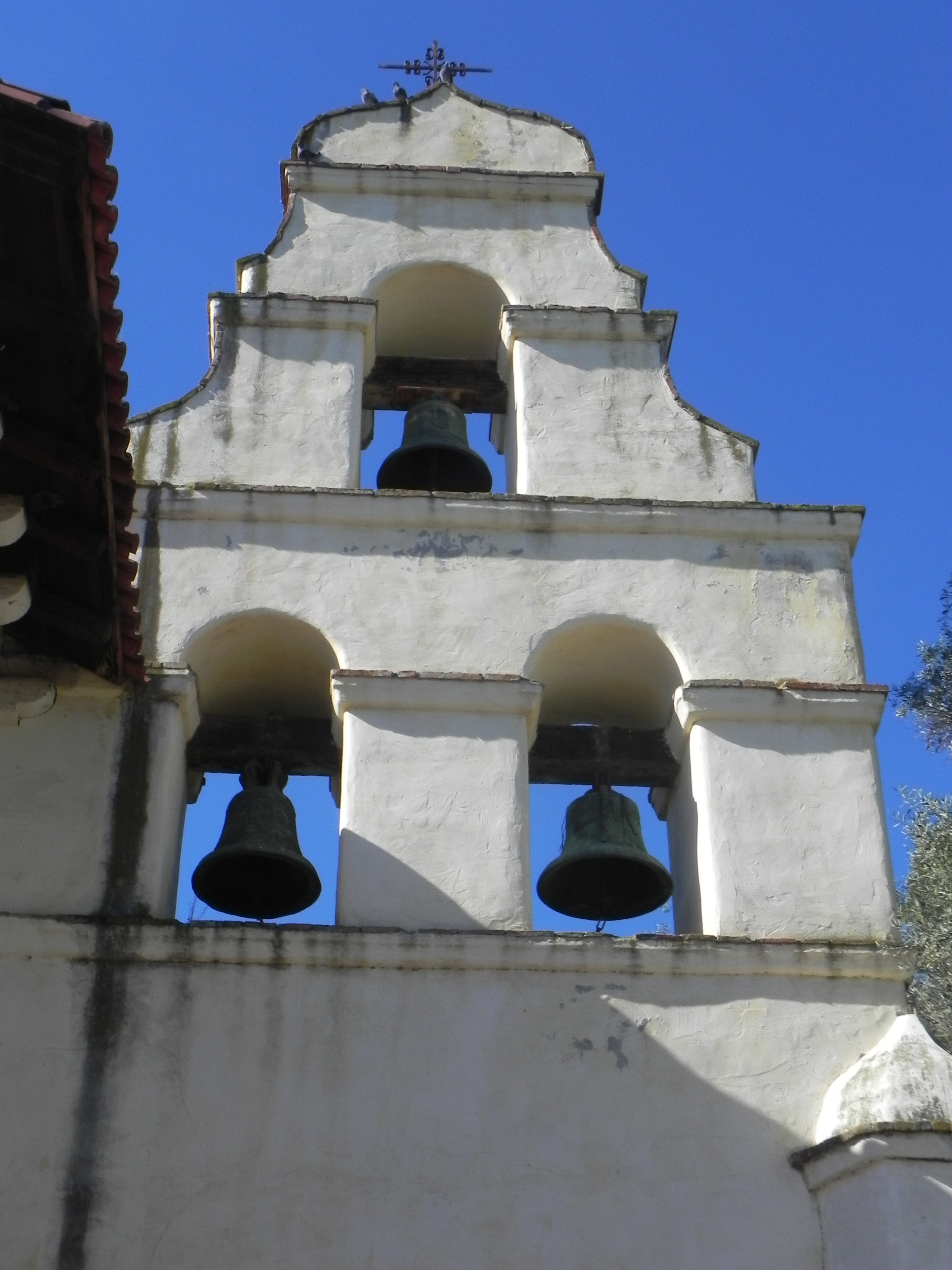
Mission bells, San Juan Bautista, California.

By CHRISTIAN CLIFFORD

(originally published Oct 4, 2013  in Catholic San Francisco)

I recently went to the circus for the first time since I was a child. The show lived up to its name, “Built to Amaze.” I saw awe in my 5-year-old’s face. After immersing myself in Blessed Junipero Serra’s story, I can say with confidence that he was created to amaze.

For me, the gist is this: Serra left the comforts of Mallorca, Spain, to bring a new vision of love to total strangers. He personally baptized 98 percent of adult converts at Mission Carmel. He walked an estimated 4,000 miles in what is now California, with a seriously injured leg. When at his headquarters in Carmel, he slept on a wood board with four legs. He often pleaded with the crown and its agents, always suggesting to never forget the words of Jesus: “I am the vine, you are the branches. Whoever remains in me and I in him will bear much fruit, because without me you can do nothing” (John 15:5). Nothing could get in Serra’s way of pruning the vineyard he found himself. According to records at The Early California Population Project, Serra’s legacy was 101,000 baptisms, 28,000 marriages and 71,000 burials at all 21 missions and from the Los Angeles Plaza Church and the Santa Barbara Presidio. He alone confirmed 4,076. He embodied what St. Augustine shared, “Do not turn away from the one who made you, even to turn toward yourself.”

By visiting The Huntington Library exhibit commemorating Serra’s 300th birthday in San Marino, I wanted to learn more how to be a man of faith through Serra’s experiences. My prayer to Serra was that by visiting the exhibit and its 250 artifacts from 60 lenders, more light would be shed on his life so that I can better inspire the young men that I teach.

The Huntington is such a massive place that I actually got lost. When I saw two Norbertine priests and their students from St. Michael Preparatory School in Silverado, I knew I was on the right track. Many of the objects at the Virginia Steele Scott Galleries, Erburu Wing resonated with my own faith journey. There was Serra’s notebook used as a student from 1731-1735 in Palma, Mallorca, reminding me of the intellect’s place in discipleship. I reflected on my vocation as teacher while peering at Serra’s personal Bible (Venice, 1508), used while a professor in Palma. The letter from Abraham Lincoln dated March 18, 1865, returning the mission property to the Order Friars Minor, made me hope for better days ahead in church-state relations in America. While driving back to the Bay Area and hearing my 5-year-old son say “Are we home yet?” for the upteenth time, I recalled the 18th-century Franciscan tunic (habit) on display, worn until it fell off the body, a physical reminder of the order’s vow of Christian poverty. Serra must have
been smiling down on us. What I was most amazed by was an artifact that told so many stories. The baptism record from Petra, dated Nov. 24, 1713, for “Miguel Joseph Serre, son of Antoni and Margarita Ferrer, a married couple,” made me think of my own baptism being noted at St. Andrew’s in Daly City. I am part of a 2,000-year heritage!

Let us pray that Serra’s life devoted to the service of others becomes better understood and that we more sincerely live the words of St. Francis of Assisi, “Preach the Gospel at all times. Use words when necessary.” He will amaze.

Christian Clifford is the author of three books about Catholic Church history in Spanish-Mexican California. For more information, visit www.Missions1769.com.