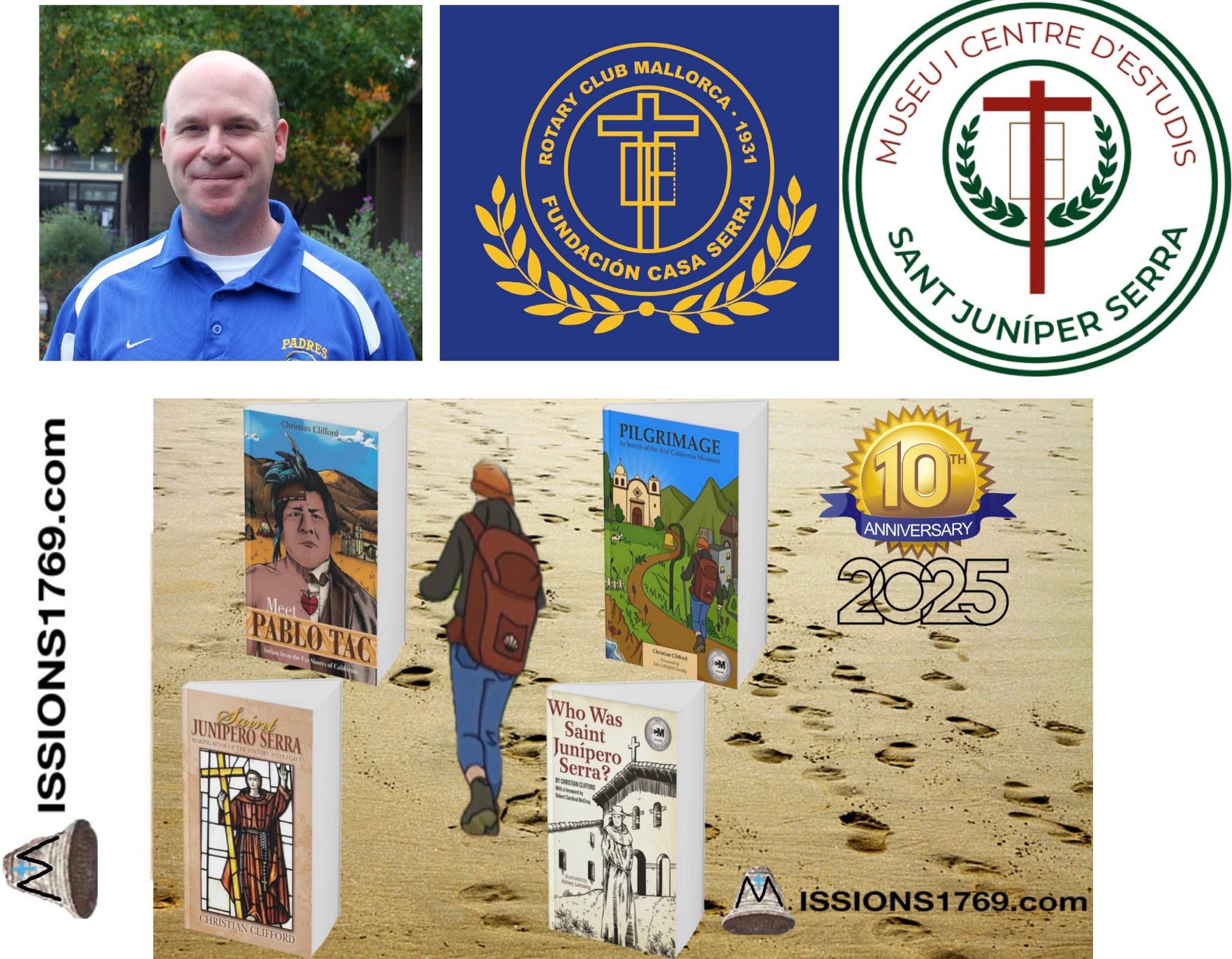
Soon after Pope Francis announced in early 2015 that Bl. Junípero Serra would be canonized, I began a journey of discovery leading to writing four books (two of which received Catholic Media Association Book Awards), many articles, public speaking engagements, and walking the 800-mile California Missions Trail.
This past year marked the 10th anniversary of St. Junípero Serra’s canonization and was full of opportunities to speak and write about him.
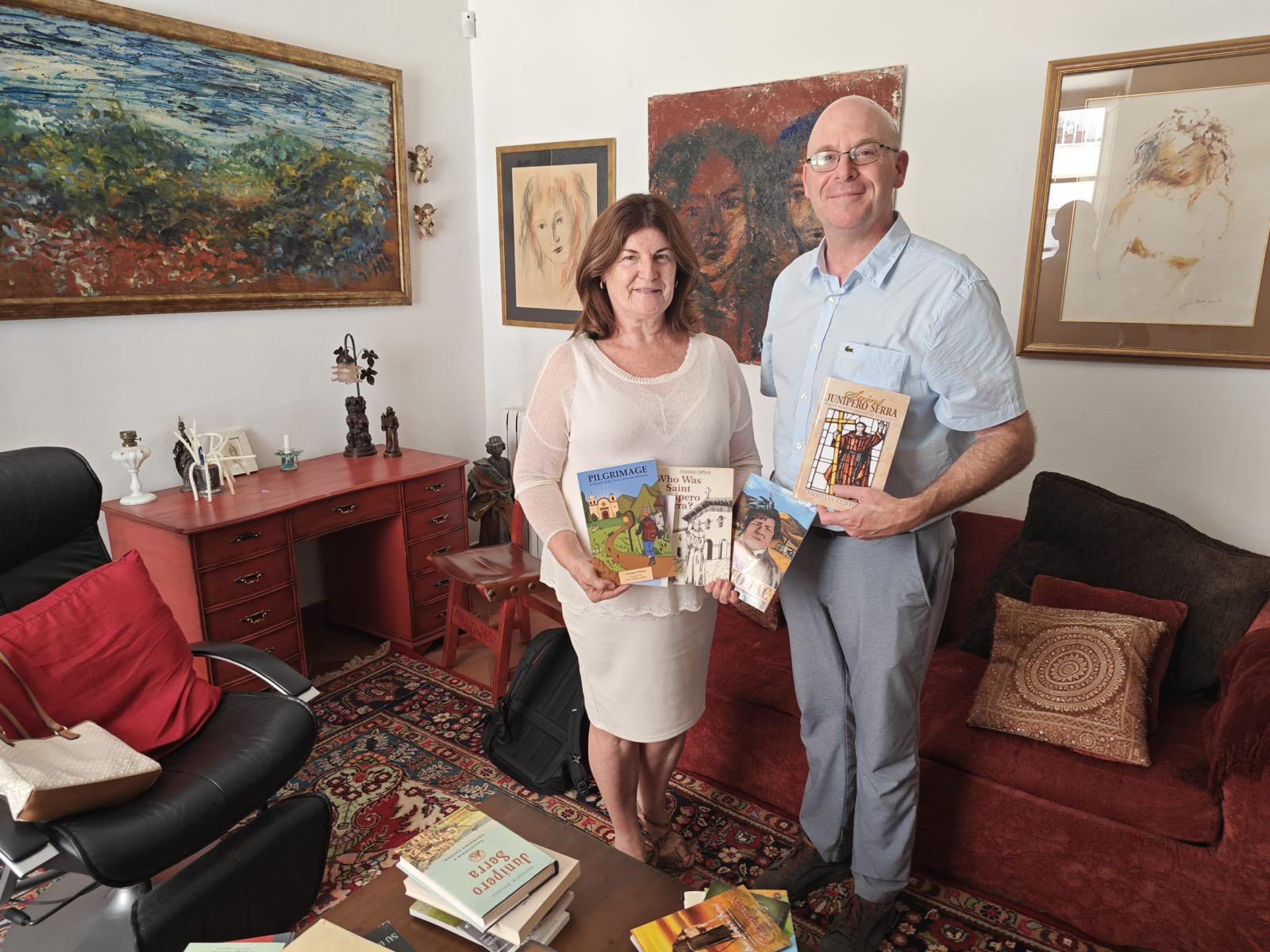
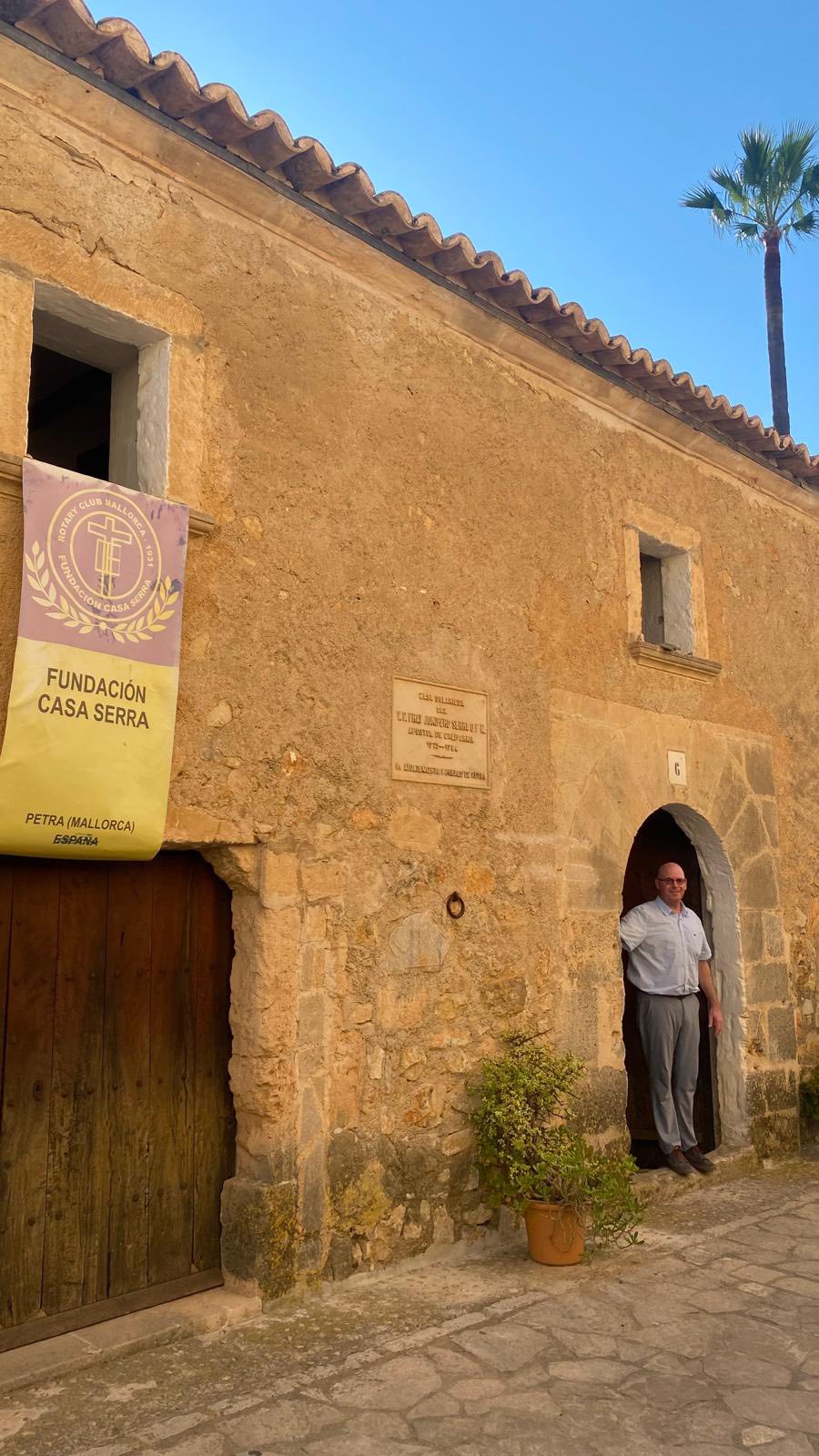
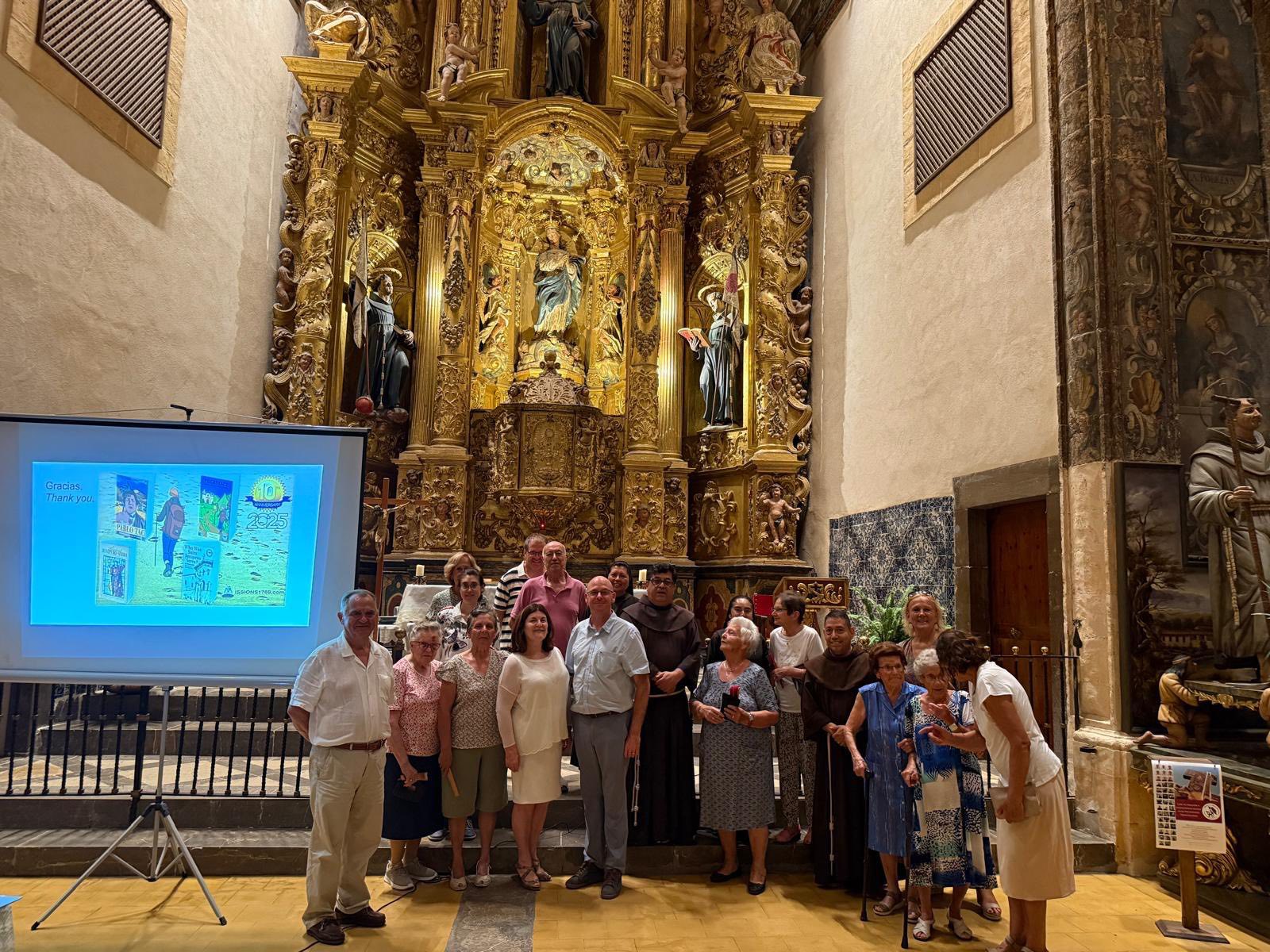
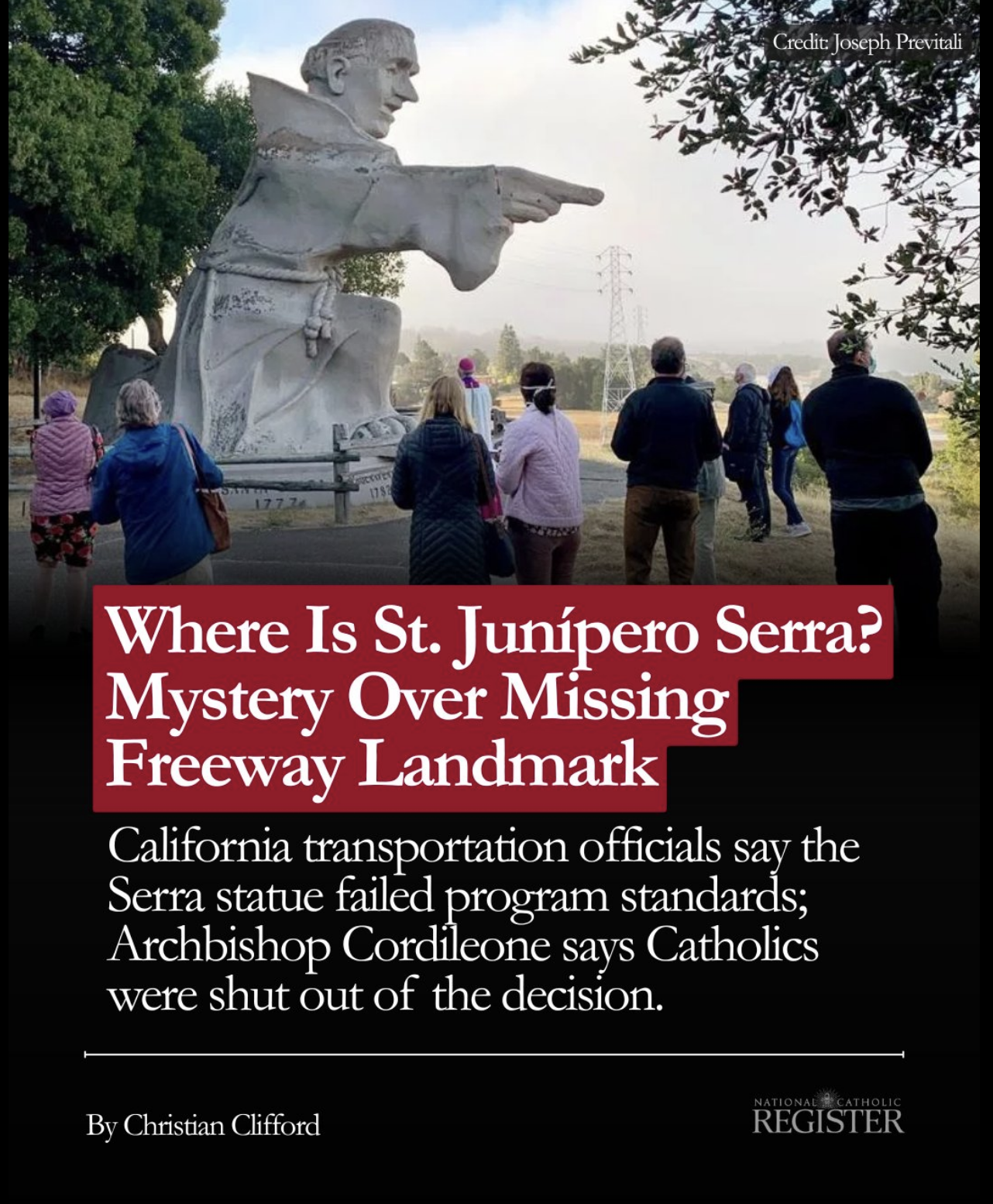
Hands down, the highlight was visiting Mallorca, Spain, home to St. Junípero Serra for the first 36 years of his life. It was so special. I gave a talk just feet from the baptismal font where he was baptized! My host was the wonderful Catalina Font, President of the Casa Serra Foundation, whom I also saw during her recent visit to San Francisco (read about it here). Also noteworthy was my breaking news story regarding the removal of the statue of Junípero Serra in Hillsborough, California.
Below is a recap of what I did since my last holiday letter.
I was interviewed by . . .
Brandon & Raul of the JP2 Morning Crew on St. JP2 Catholic Radio in San Diego
José Luis López-Linares of Madrid, director and producer of WE THE HISPANOS @ Lópezli Films
Guillermo Bauzá at Ràdio Petra, Petra, Mallorca, Spain
James Day for Columbia, the magazine of the Knights of Columbus
Nick Patrick of The Friar, the student newspaper of Junipero Serra High School
Camino Serra, Mission Santa Clara, Santa Clara, CA
Special Notes
“Catholics in the New World”, that I was interviewed for the summer of 2024, was released by the Diocese of Savannah.
The petition to nominate Pablo Tac for the cause of canonization is close to 700 signatures!
I have been on the ground floor of an exciting project on the California Missions Trail. Expect news about it in February on socials @Missions1769. #Buencamino
Soon after Pope Francis announced in early 2015 that Bl. Junípero Serra would be canonized, I began a journey of discovery leading to writing four books (two of which received Catholic Media Association Book Awards), many articles, presenting to groups, and walking the 800-mile California Missions Trail. It was exciting to see that the name chosen for the western route of the Eucharistic Pilgrimage from San Francisco to Indianapolis was named after St. Junípero Serra! So apropos.
Last summer, I had the pleasure of speaking to participants of the Camino Serra. A thank you letter from them captures the essence of why I do what I do.
As a first time pilgrim, it was comforting to hear about the Camino from a pro! We all loved the introduction on St. Junipero Serra and the adoration reflection was beautiful. As a teacher, I am excited to order the children’s book for my classroom so all my students can learn about this beautiful saint.
2025 should be a year full of many opportunities to speak and write about St. Junípero Serra. It marks the 10th anniversary of his canonization and the 10th anniversary of my little apostolate.
I am so grateful for your continued support. Thank you.
Soon after Pope Francis announced in early 2015 that Junípero Serra would be canonized, I began a journey of discovery. My research has led to my writing four books (two of which received Catholic Media Association Book Awards), many articles, presenting to groups, and walking the 800-mile California Missions Trail.
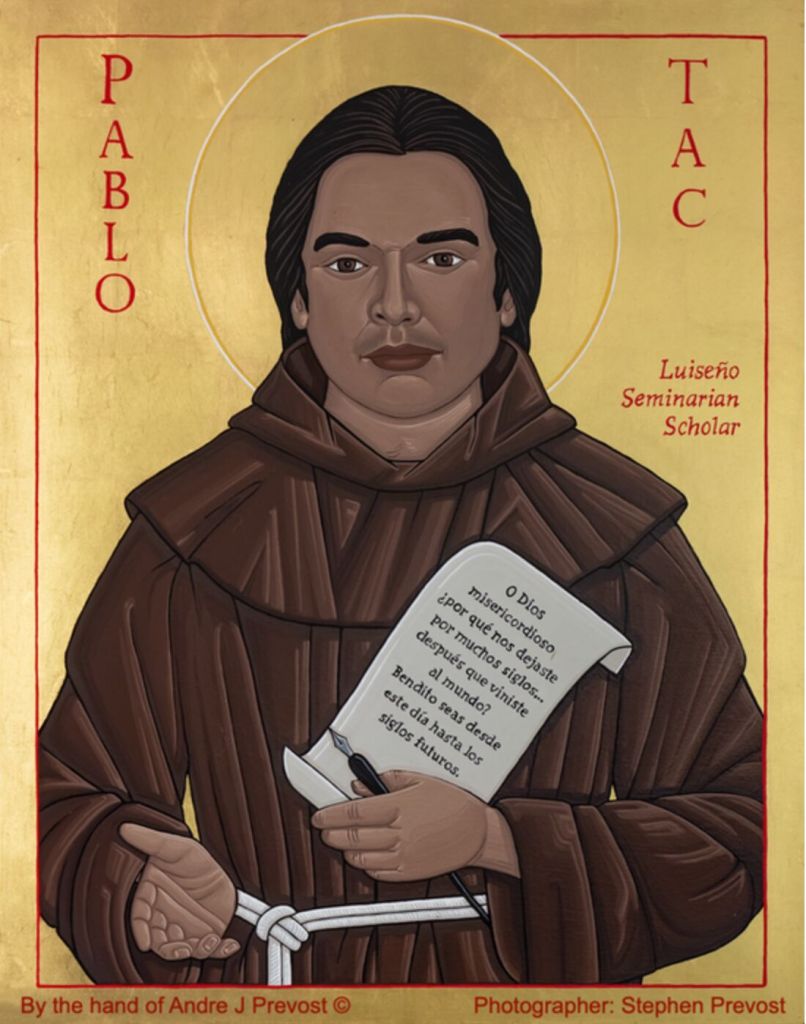
The highlight of my year was an icon written of Pablo, the subject of my third book. It was done by Andre Prevost, a Canadian iconographer, for the chapel at St. Thomas Aquinas High School in North Vancouver, B.C. I hope that it inspires many young people to walk with Pablo throughout their lives. Learn more about him @ change.org/InvokePabloTac.
I also surpassed my original goal of getting my books in the California missions founded by Saint Junípero Serra (he founded the first nine–my books have sold in 17 of the 21 California mission gift shops!). I never imagined how successful my work at Missions1769.com would be, especially when considering that the average book published today sells less than 300 print copies over its lifetime in the US retail channel. I owe so much of this to your support. Thank you.
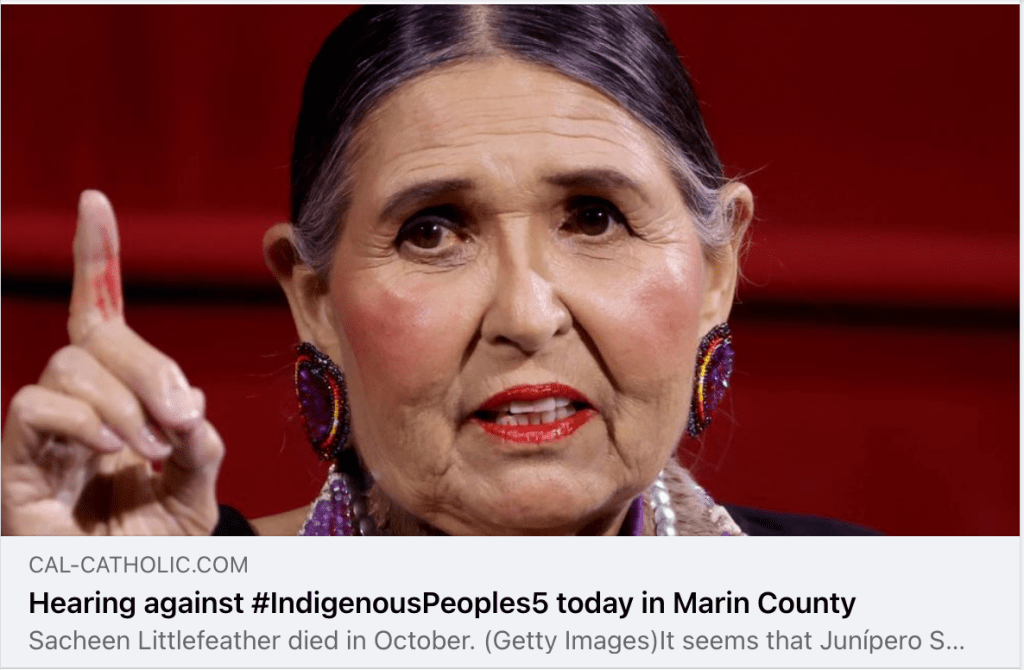
Note: A shorter version of the following appeared in California Catholic Daily with the title “Hearing against #IndigenousPeoples5 today in Marin County” on 2/22/2023. It can be read here.
It seems that Saint Junípero Serra (1713-1784), in certain circles the oft-criticized Catholic saint canonized by Pope Francis in 2015, will finally be having his day in court, or so it seems. The wheels of justice have been slowly turning since felony charges were filed in Marin County Superior Court on November 12, 2020 against the #IndigenousPeoples5, a reference coined by their allies, accused of the destruction of a statue of Saint Junípero Serra at Mission San Rafael Arcángel on October 12, 2020.
Saint Junípero Serra, the Mallorcan-born, 5’2”, Franciscan priest, entered San Diego in 1769 and founded Mission San Diego de Alcalá, the first of nine begun during his tenure as father president. He was 57 years old when he was given the opportunity to fulfill his dream, bringing the gospel to gentiles. Lately, he has been vilified.
California, home to over 11 million Catholics, has seen a rash of violence on statues of Saint Junípero Serra since the canonization. In addition to vandalism of public statues of Junípero Serra by angry mobs throughout California, they have also been desecrated on Catholic church property, at Mission Carmel, Old Mission Santa Barbara, Mission San Gabriel, Mission San Rafael, and most recently at Mission San Jose. Mission San Rafael is the only one that involved arrests.
On November 13, 2020, Catholic News Agency reported that Archbishop Salvatore J. Cordileone of San Francisco believed “the decision to prosecute five people on felony vandalism charges ‘represents the first time that any of the lawbreakers attacking statues of St. Junípero Serra and other acts of vandalism on Catholic Church property across California will be held accountable for their actions in a court of law.’”
Archbishop Cordileone leads the Catholic Archdiocese of San Francisco, serving Marin, San Mateo and San Francisco counties.
Some have called for restorative justice. In a November 10, 2021 Marin Independent Journalcommentary, Archbishop Cordileone replied to the call, “I would rejoice and be grateful to begin such a journey of reconciliation with the Serra statue vandals. However . . . I fear that this is not something in which they or their supporters are interested.” A December 17, 2020 El Tecolote articlehighlights just how uninterested supporters of the #IndigenousPeoples5 were in restorative justice.
A preliminary hearing for the five defendants arrested for destruction of a statue of Saint Junípero Serra at Mission San Rafael Arcángel on October 12, 2020 was held in Marin County Superior Court on August 17, 2022 (People v. Aguilar, SC214700A). The next scheduled date is February 22, 2023, Ash Wednesday, at 9am.
There are currently 109 federally recognized Indian tribes in California and more than fifty–five tribes in California that are unrecognized. In June 2021, the United States Conference of Catholic Bishops (USCCB) announced that the creation of a comprehensive pastoral plan for Native Americans is underway. The last time such an endeavor was done was March 2003.
Sacheen Littlefeather, Apache, who declined Marlon Brando’s 1973 Oscar on his behalf, said of the five arrested for destruction of a statue of Saint Junípero Serra at Mission San Rafael Arcángel, “The legitimate federally recognized Native American Indian people of Marin County did not participate in, and knew nothing of the actions, nor did we sanction the destruction of the statue of Junipero Serra . . . . As a member of the Kateri Tekakwitha Catholic Circle, I would like to make it clear that we do not condone such behavior and we pray for all of those involved.” Littlefeather died at her Marin County home on October 2, 2022 at age 75.
According to author Richard Rodriguez, Saint Junípero Serra is worth defending. He sees himself as “. . . made by the missions” and goes on to write in his January 2018 First Things article “Padre Mestizo”, “We are called to his [Saint Junípero Serra’s] grave because of the strength of his resolve—a resolve he shared with thousands of missionaries. His great ambition, his deep desire, was to join his soul to the souls of Indians, many of whom fled his presence.”
Saint Junípero Serra’s memory is worth defending against the brazenness of Ines Shiam Gardilcic, Victoria Eva Montanopena, Melissa Aguilar, Marjorie Nadeska Delgadillo, Moira Cribben Van de Walker. The year 2020 was a tough one, even for a Catholic saint. Saint Junípero Serra, who Pope Francis called “the evangelizer of the west in the United States”, has been taking it in the chin. Catholics (really anyone with the common good in mind) need to help him off the mat by demanding accountability from those involved.
In 1999, three members of the Biotic Baking Brigade threw pies in the face of Mayor Willie Brown of San Francisco during a press conference. The activists did it to bring attention to their grievances over what they perceived as Brown’s mishandling of homelessness. They did time and the judge’s decision seemed to make possible future pie-throwing activists pause. When is the last time you heard of a pie being thrown at someone during a press conference?
Hopefully the neglect of people learning history and the outrage that follows from such neglect will subside. When history is knowing some of the facts rather than the sum of facts, we are left with pie on our faces.
UPDATE (2/27): The case has been granted a continuance until April 26 when the defendants are scheduled to appear at 9 a.m. in courtroom D.
UPDATE (5/25): #IndigenousPeoples5 guilty of a misdemeanor instead of a felony offense. According to CNA reporter Kevin J. Jones, “The defendants must pay monetary restitution to the church to repair or replace the statues, complete 50 hours of volunteer work, apologize in writing, and participate in a community forum with ‘a credible historian who will give stakeholders a chance to have a meaningful dialogue about the issue.’ They must also stay off church property.”
Christian Clifford writes on the subject Catholic Church history in Spanish and Mexican California. His latest book is the Catholic Media Association Book Award recipient Pilgrimage: In Search of the REAL California Missions, the story of his 800-mile walk of the California Missions Trail. He can be reached at www.Missions1769.com.
Note to reader: The following article was in the Fall 2018 issue of Today’s Catholic Teacher (1967-2020).
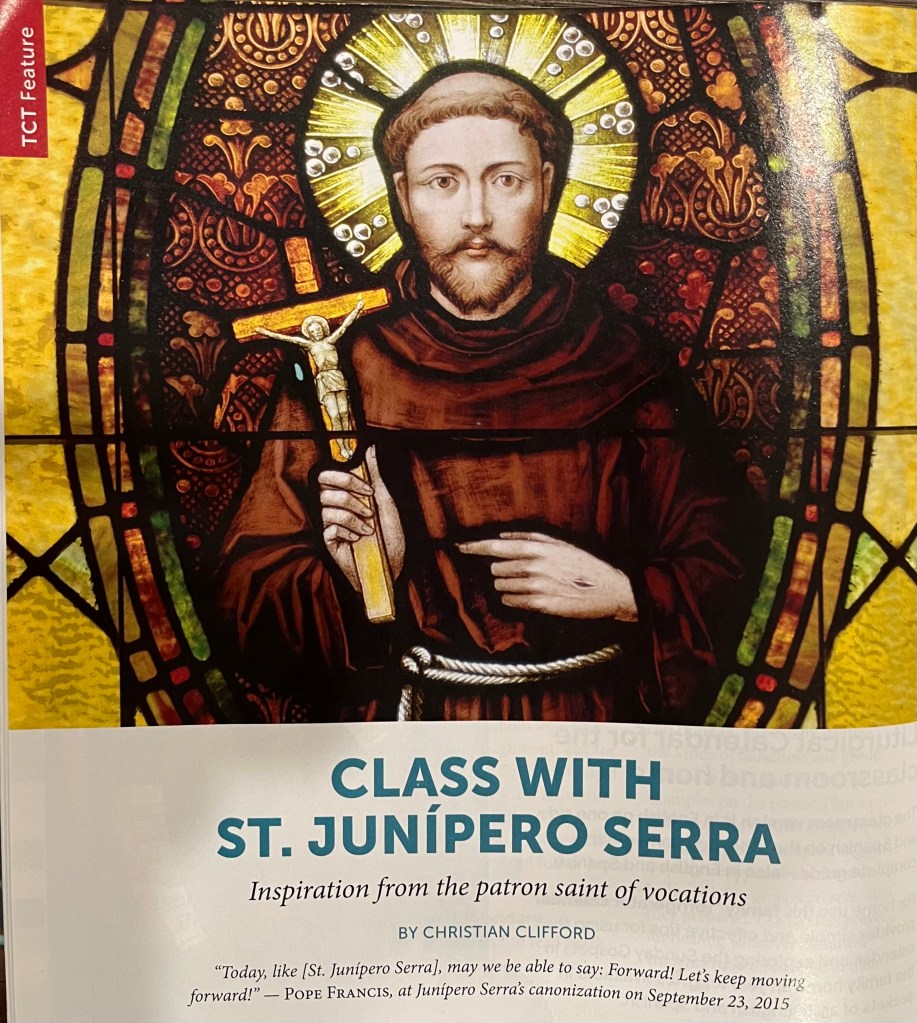
Governor Jerry Brown (CA-D) called Junípero Serra “one of the innovators and pioneers” in California history. Bishop Robert McElroy of the Diocese of San Diego referred to Serra as a “foundational figure” of the Golden State. Not everyone admires Serra, though. In certain circles Junípero Serra symbolizes the negative outcomes of Spanish colonialism, though the historical record proves otherwise (the Church collected 2420 documents—7500 pages total—of Serra’s writings and 5000 pages of materials written about him from those who knew him, and testimony of people inspired by his life). Pope Francis succinctly presented Serra’s relevance to disciples today in the homily at Junípero Serra’s canonization on September 23, 2015 in Washington, D.C., “Today, like him [Saint Junípero Serra], may we be able to say: Forward! Let’s keep moving forward!” In other words, his life can inspire us to proclaim the Gospel with joyful hearts, amid the many challenges.
A Brief History
Marco Polo traveled an estimated 15,000 miles to see what existed beyond his known world. The Lewis and Clark Expedition, 7,000 miles, to see what the fledgling United States had acquired in the Louisiana Purchase. Saint Junípero Serra traversed an estimated 24,000 miles to share the Gospel message.
Saint Junípero Serra (1713-1784) came from humble beginnings. Born and raised in Petra, Mallorca, Spain, he responded to God’s call and was ordained a priest in the Franciscan order in 1737. From 1740-1749 he lived a comfortable life as a university professor. But he discerned that it was not the life God was calling him to and in 1749 he traveled to Mexico City. For the next twenty years he served the Christian Indians north of Mexico City. In 1769, he finally was given the chance to do what he had wanted to do for so long, be a missionary priest. The government of Spain wanted to keep Russia and Britain out of the lands they claimed, so they organized an expedition, intent on occupying what is now the state of California.
The Sacred Expedition had five detachments –three by sea and two by land. The one with the military and spiritual leaders, Captain Gaspar Portolá and Father Junípero Serra, left Loreto, Baja California, by land on March 28 and reached San Diego Bay on July 1, 1769. The Sacred Expedition had 238 men, seventy-eight of whom were soldiers.
In 1776, two-hundred-forty settlers traveled from Mexico to colonize San Francisco. Priest, soldier, and colonist were surrounded by an estimated 300,000 Indians. The Spaniard never came into contact with the vast majority of the Indians who lived outside the Spanish sphere of influence. In 1790, just over two decades after Serra founded the first mission in present-day California at San Diego, eleven missions and four presidios had been constructed, occupied by an estimated 30 priests and 211 soldiers. By the time the last mission closed its doors in 1836, due to the Secularization Law passed in 1834 by the Mexican Congress, 142 Franciscan priests had ministered in Alta California. Two of these priests were killed at the hands of natives. A tragic unintended consequence of the cultural exchange was the majority of California Indians who did convert died due to diseases for which they had no immunity. James A. Sandos, author of Converting California, wrote, “Spanish authorities and Franciscan missionaries . . . sought to bring Indians into a new Spanish society . . . and were distressed to see the very objects of their religious and political desire die in droves.”
Professional Growth Plan
I created my professional growth plan at Serra High School on our school’s namesake. I had a brief conversation with a colleague about the vandalism of statues of Saint Junípero Serra occurring in California. I explained how sad it was and he agreed and said, “We know better [about the holiness of our school’s namesake]” Another time a different colleague asked me how I share my passion for Junípero Serra with my students. A few days later, I was teaching my students about how the monasteries of the Middle Ages were known for their hospitality. A student asked, “Serra was a monk. Didn’t he kill a whole bunch of Indians?” The following day, a student said a teacher had once told him that Serra had enslaved the Indians. I think Saint Junípero Serra was trying to tell me something. Possibly because we are a diocesan school, we seem to struggle to find a specific charism based on our school’s namesake. It all led me to think how ideal it would be to present to the community a Serran Spirituality. Therefore, I decided to incorporate my knowledge of and passion for Saint Junípero Serra directly into my classroom teaching. But how?
My outcome became, “Specifically, as a result of this plan, students will know the school’s namesake more intimately, deepening their understanding of the school’s core values [Faith, Wisdom, Service, Community. Leadership] and what it means to be a part of the Serra brotherhood [a bond based on the values of respect, integrity, inclusion, and compassion]” and “Be encouraged to turn to St. Junípero Serra to intercede on their behalf (Doctrinal Elements of a Curriculum Framework for the Development of Catechetical Materials for Young People of High School Age, III. B. 6.).”
The goal is to present to the school’s principal and president quotes and reflections pertaining to our school’s namesake for use on the school calendar. This would help the school meet a growth area of the Western Catholic Education Association Self-Study Report, that states, “The school has identified a need to develop a recognition of the qualities and traits of St. Junípero Serra and incorporate this into the school calendar and traditions.”
So, in essence, the students would present what was most important to them and help others to reflect and pray in the future, thus creating a charism at the grassroots level through a focus group.
Class with Saint Junípero Serra Lesson Plan
We began with the Prayer for the Intercession of Junípero Serra. For Prayers for Vocations, visit the USCCB website.
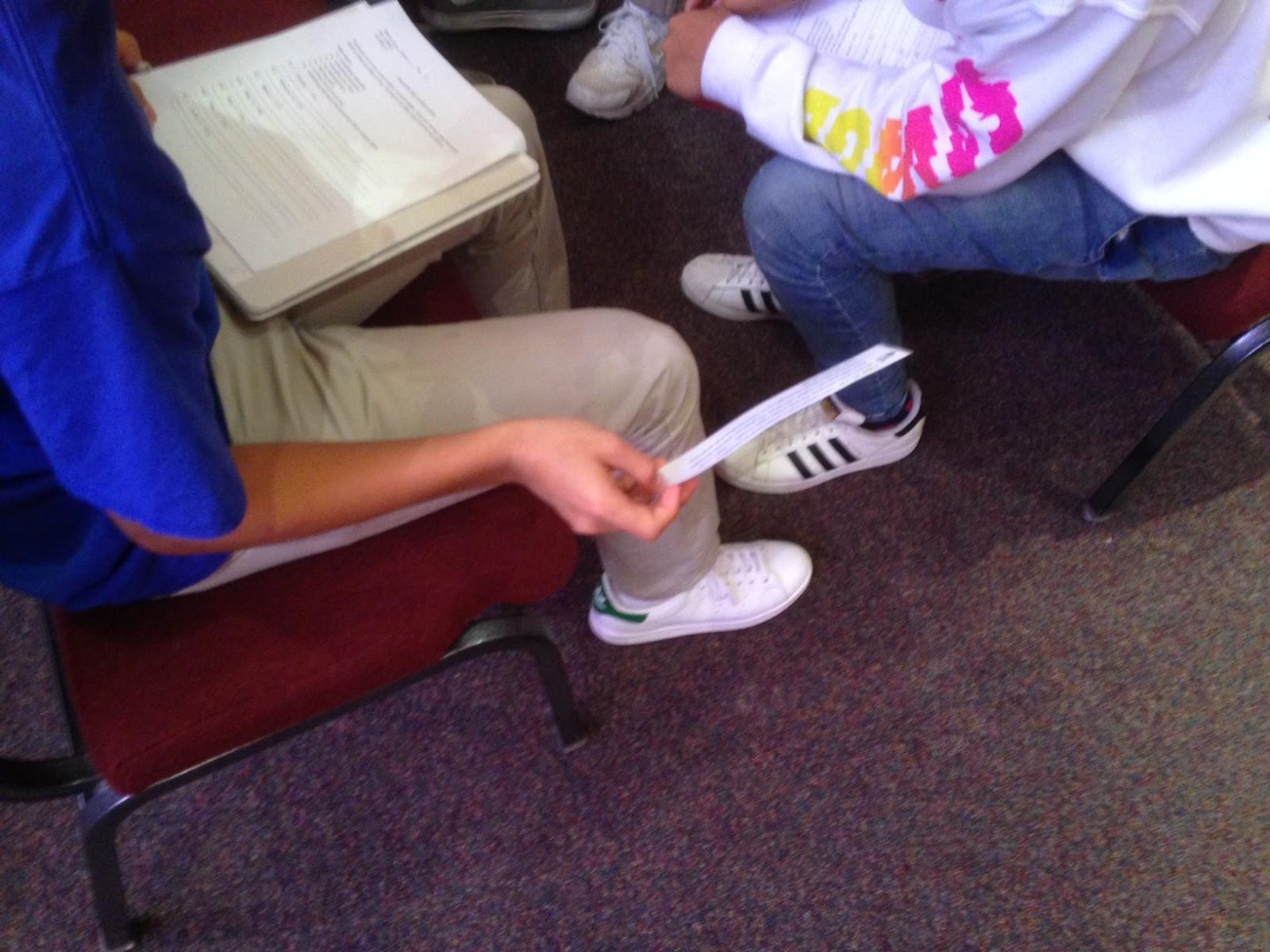
My research on the life of Saint Junípero Serra led me to fourteen direct quotes (tinyurl.com/yal27wng). I numbered them and split the students into pairs to begin our class with Saint Junípero Serra.
I set up the context and objective by reading the following to the class,
Saint Junípero Serra was a complex man living in complex times. He once told the territory’s governor that if the natives should kill him, that they should be forgiven and pardoned. He penned what would go down in history as the native bill of rights. Yet he was also a man of his time, using self-flagellation as a form of penance and upholding corporal punishment, actions peculiar to us today.
Foremost, Saint Junípero Serra identified himself as a spiritual father. However, his spirituality can be challenging for one to discern due to the bulk of his extant writings pertaining to his role as an administrator. It is hard to incorporate one’s deep devotion to the Blessed Virgin Mary in a letter that deals with requesting plates from a government official. The following are provided to help one get to know his beliefs and how they affected the depths of his soul.
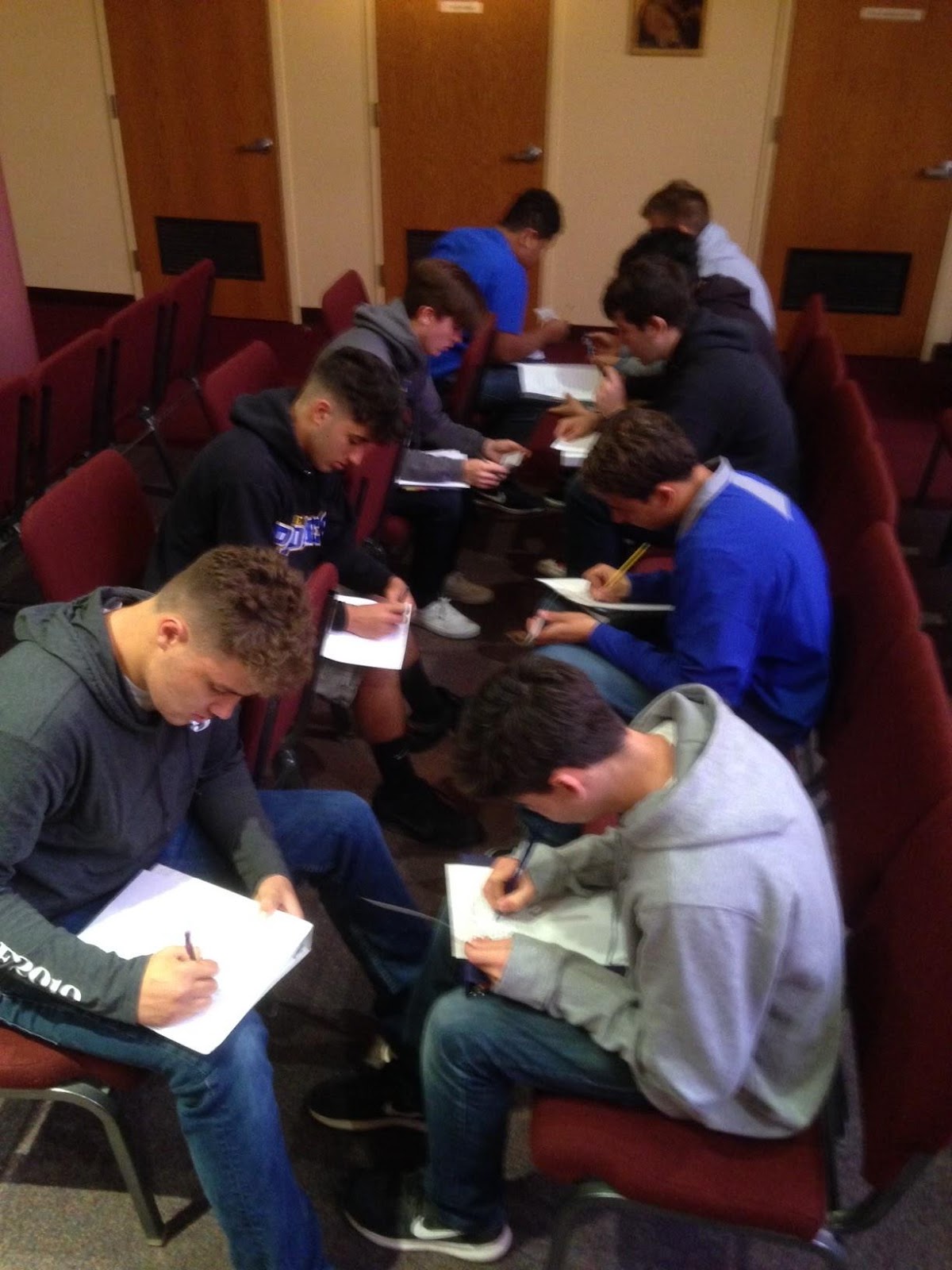
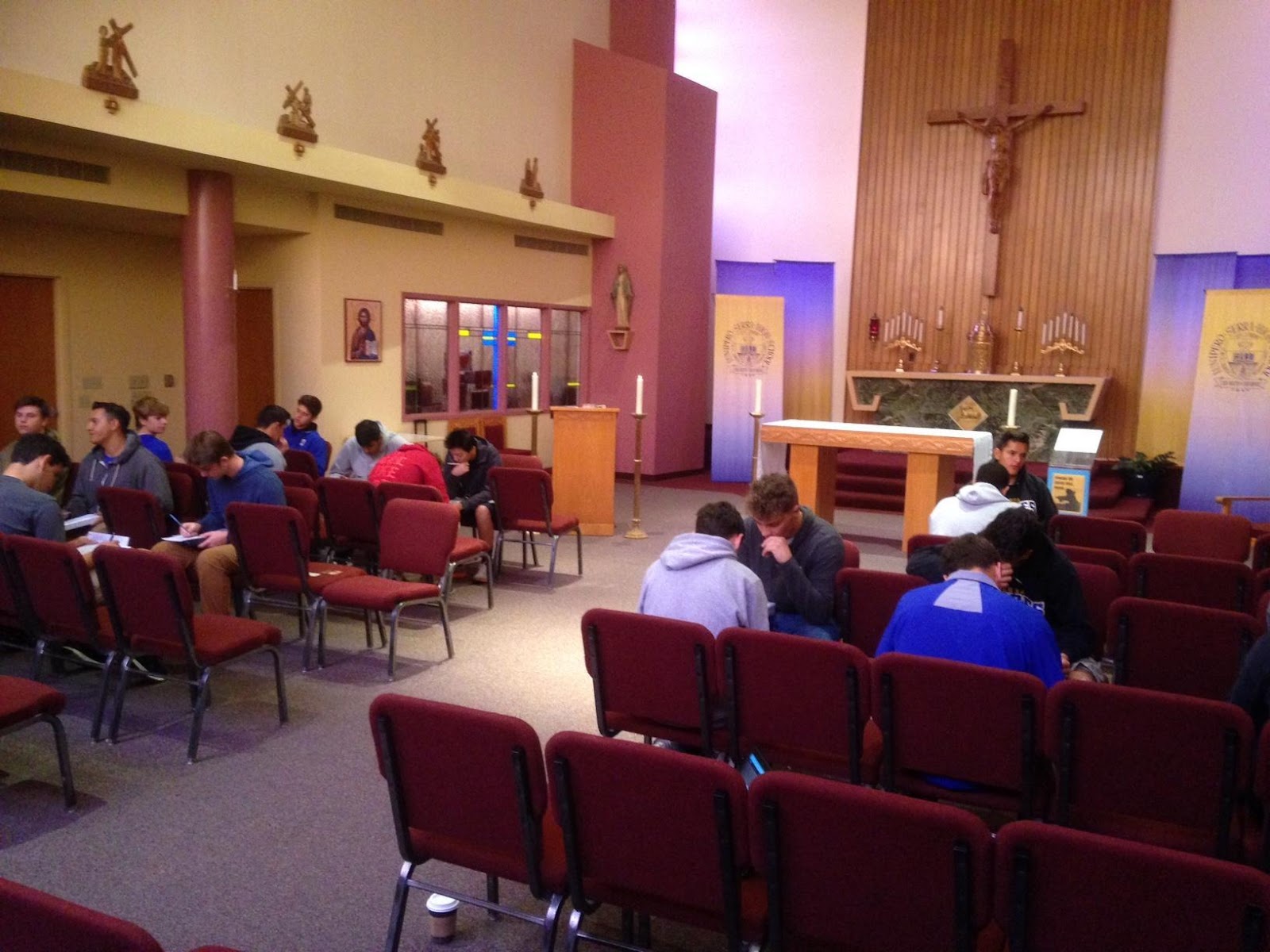
In pairs, one member read the quote aloud and then both made a quick note (tinyurl.com/y8z2xkxv). The plan was created for a 40-minute class. Students spent around two minutes with each quote. The lesson was created for 11th-grade boys, but it can be adapted for any grade level. I recommended they note one of the following after reading each quote . . .
something interesting.
something surprising.
a question.
an important term.
the key point.
a three (3) word summary.
Pair-Share Samples
A student remarked for the September 1741 entry: “Serra was a true scholar.”
A student wrote for the August 20, 1749: “Serra is just like everyone else; he relies on other people to motivate him and encourage him to do good things.”
A student noted for May 15, 1769: “I thought it was interesting that Serra saw the Indians as Adam and Eve before the apple, which showed that he felt they weren’t evil.”
A student noted for the July 3, 1769 entry: “Sacrifice, salvation, hardships”
A student wrote for the February 10, 1770 entry: “The Indians revolted, yet Serra continued to preach the name of God.”
A student commented for June 18,1771: “The Indians are learning a lot from Serra and he learned a lot from them.”
A student asserted for the May 21, 1773 entry, “Indians are kind, even without Jesus.” For the same date, a student asked, “Did the Indians of the tribe convert to Catholicism?”
A student noted for August 22, 1775: “It is important to remember that Serra was on a hard journey and he needed help from God.”
A student remarked on March 1, 1777: “Key point: No matter what people believe they can show compassion for others.”
A student commented on the January 7, 1780 entry: “Religion does not serve as a blockade to love.”
The above samples are from students who identify as Agnostic, Atheist, Baptist, Buddhist, Catholics, a convert, a Hindu, a Mormon, and a Sikh, proof positive that the lives of the saints stirs the human spirit.
With approximately ten minutes left in class, I asked the students to individually reflect on the exercise.
Reflection
Select the quote that was most memorable to you. They are attached (Discerning the Spirit) for your reference.
1. Note the number and date # _____ Date ______________
2. Select one (1) to respond to.
a. How did it help you deepen your understanding of the School Prayer, School’s Core Values, OR School’s definition of Brotherhood? Find them at tinyurl.com/ybqotklc. b. How does what Saint Junípero Serra wrote relate to the world?
Reflection Samples
2. a. In the quote from May 15, 1769, Serra explains his beliefs that everyone, even Gentiles, were loved by God . . . . I believe that this relates to the line from the JuníperoSerra School Prayer, “Help us face the reality of working together as a community.” Through this quote, Serra helped strengthen my understanding in the Padre Brotherhood and that we should love everyone, help anyone in need, and treat everyone equally. We shouldn’t hold grudges or biases based on others beliefs or past actions. Instead we should follow Jesus’ and Serra’s lives of always helping each other out and always expressing God’s love.
2. a. The quote from September 1741 has helped me understand the meaning of the school’s values. One of the values mentioned is wisdom. In his quote, Saint Junípero Serra explains how one should look towards God in seeking wisdom. This directly aligns with the core values of the school, which state we should be challenged to rigorous study in pursuit of the truth. Saint Junípero Serra also mentions the pursuit of truth, saying that by following God’s light we may be guided toward the truth.
2. a. The quote from March 1, 1777, helped me deepen the definition of brotherhood because it gave me a sense of spreading the love through kindness to one another. The brotherhood is helping other brothers out and not leaving anyone behind, wanting to help them keep up and strive for greatness. This goes with what the school believes a Padre is, “a man of respect, treating others with love and kindness.”
2. b. Serra wrote on February 10, 1770, that he had to teach the Indians how to speak Spanish, but they also had to teach him how to speak their language. This relates to the world because people need to be able to learn how to communicate effectively. If people can’t do that then the world will be a nasty place. When people are able to communicate well people work out problems, get stuff done and will be able to not only learn from the experience but be able to show others as well. This helps people to live peacefully.
To conclude, I hope that you will spread the good news about Saint Junípero Serra with your students. You will not be disappointed. His life will surely inspire them to be living gospels. Saint Junípero Serra, pray for us!
___________________ Christian Clifford is a veteran Catholic school teacher and author of books about Catholic Church history in Spanish-Mexican California. Clifford’s writings have appeared in California Teacher, Catholic San Francisco, Catholic Standard, Today’s Catholic Teacher and on Aleteia, Catholic Exchange, Crux, Patheos, and the Philippine Daily Inquirer. He lives in the San Francisco Bay Area with his wife and son. For more information, visit www.Missions1769.com.
Soon after Pope Francis announced in early 2015 that Junípero Serra would be canonized, I began a journey of discovery. My research has led to my writing four books (two of which received Catholic Media Association Book Awards this year), writing articles, presenting to groups, and walking the 800-mile California Missions Trail. I have met so many interesting people along the way. I hope that I have been able to help you to speak the truth about St. Junipero Serra and the purpose of the California missions.
In addition to receiving CMA Book Awards, other highlights in 2022 included the release of the Knights of Columbus video about me for Season 3 of “Everyday Heroes” and having an article about Pablo Tac published in Boletín, the award-winning journal of The California Missions Foundation.
Thank you for your continued support. Special thanks to my family; His Eminence Robert Cardinal McElroy, Bishop of San Diego (pictured below); Catalina Font Gomila, President of the Friends of Junípero Serra Association in Petra, Spain; Greg Schwietz, President of Serra International; and Knights of Columbus California State Council SD Rene Trevino.
I hope that you continue calling on St. Junipero Serra and Pablo Tac. I will never tire of sharing their stories. Here is a recap of how I did so in 2022.
In September, my family was honored to visit with His Eminence Robert Cardinal McElroy, Bishop of San Diego! In 2016, he was kind enough to write the foreword to my award-winning book Who Was Saint Junipero Serra? Also pictured are my wife and son, to whom the book is dedicated.
(originally published Oct. 26, 2017 in Catholic San Francisco)
The San Francisco Arts Commission voted unanimously on October 2 to recommend to the San Francisco Historic Preservation Commission the possible removal of the “Early Days” sculpture of the Pioneer Monument”. One of the three figures on the sculpture is a Franciscan priest. The timing of the push to remove the “Early Days” statue of the Pioneer Monument in San Francisco coincided with the removal of Confederate statues in the South, anti-Columbus Day news, when many were celebrating National Hispanic Heritage Month, and the recent vandalism of memorials of the 18th century Franciscan, Saint Junípero Serra, who brought Catholic Christianity to California. Are those demanding removal of “Early Days” barking up the wrong tree?
Saint Junípero Serra, the founder of the California missions knew history and wanted to distance himself from the conquistadors and encomienda system. He wanted to change hearts and minds with the Gospel, not the sword. His heroics were recognized by the monument’s benefactors in 1894 with a portrait medallion near the “Early Days” statue. Dr. George Yagi, Jr., professor of history at San Joaquin Delta College, is not the first to argue how Junípero Serra defended the California Mission Indians against Spanish military abuse. Like any institution, the California missions had its saints and sinners and all types in-between. The greatest tragedy was an unintended consequence of the cultural exchange—the majority of the Mission Indians died due to diseases to which they had no immunity.
The plaque “California Native Americans” added in 1994 to the Pioneer Monument rightly notes that pre-contact with Europeans, the California Indian population was estimated to be 300,000. Historian James A. Sandos argued in Converting California that the overall population dropped 21 percent by 1830, just before Mexico took possession of California. Regarding the Indians in the area of mission influence, he notes from 1770-1830, the population declined from 65,000 to 17,000, a loss of 74 percent. Scholar Barry Pritzer estimates by the end of the 19th century there were 15,000 California Indians. Therefore, the near annihilation of the California Indians came during the Gold Rush from the 49ers and with the blessing of the government of California. The native got in the way of so-called progress and genocide ensued.
Accusation does not mean guilt. California Mission history is complex and generalizations, when looking at any history, should be avoided. It would be crazy to believe that all Pueblo Indians were bad because of Popé, the religious leader who headed the Pueblo Revolt in 1680 that killed 400 Spanish and relocated 2,000 settlers. Yet Popé has been honored with a statue in Washington, D.C.
If city officials are really set on righting a wrong of history, maybe they should demand that the San Francisco 49ers change its name. If they are really serious about removing offensive monuments, then they should consider the Monument to the Lincoln Brigade. The Republican forces (the side they fought for) in the Spanish Civil War (1936-1939) murdered 6,844 Catholic clerics and religious.
Yale University historian David Blight, an expert on slavery, and other historians presented a very sensible criteria when judging historical monuments:
PC: Joshua Sabatini, San Francisco Examiner, Mar 5, 2018.
_____ Christian Clifford is a veteran Catholic school teacher and author of three books about Catholic Church History in Spanish and Mexican California. Clifford’s writings have appeared in Aleteia, California Teacher, Catholic San Francisco, Catholic Standard, Crux, Patheos, and Today’s Catholic Teacher. He lives in the San Francisco Bay Area with his wife and son. For more information, visit www.Missions1769.com.
(Press release used for “Speaker: Prayer the ‘building blocks’ for loving God and neighbor” by Nicholas Wolfram Smith, Catholic San Francisco, August 6, 2019)
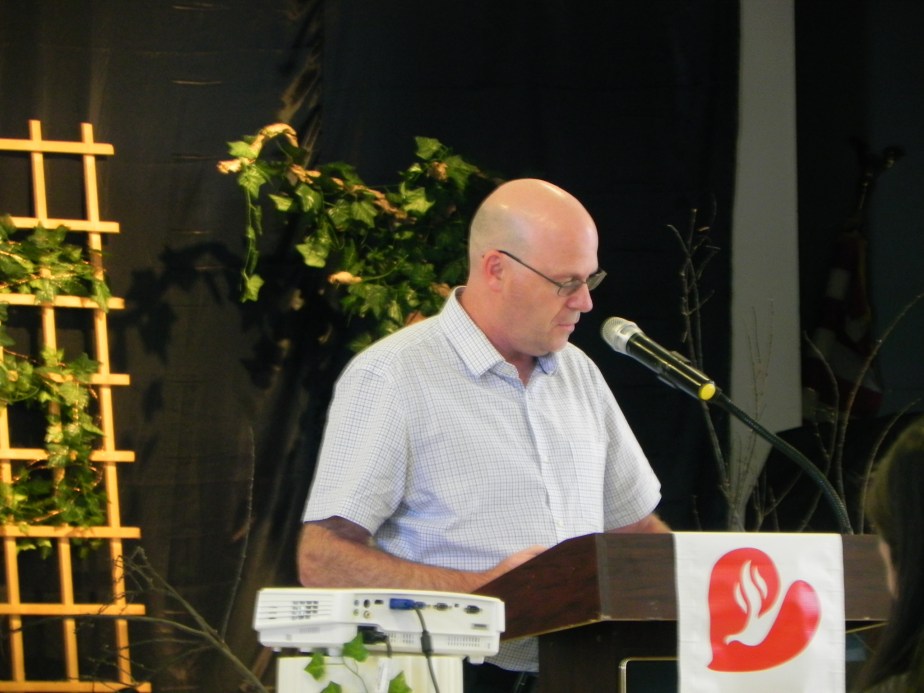
Christian Clifford, author of books about California mission history, spoke on August 3, 2019, to delegates of the Bukas Loob Sa Diyos (BLD) Singles Ministry at their Singles Inter-district Conference (SIC) at St. Dunstan Parish Center in Millbrae, California. About 150 were in attendance. Delegates came from Newark, NJ, the San Francisco bay area, Phoenix, AZ, Los Angeles, CA, Seattle, WA, Reno, NV, and Vancouver and Toronto, Canada.
According to the BLD website, “We are the Bukas Loob sa Diyos (BLD) Covenant Community. Founded in June 1985, BLD is a pioneering lay organization in the Philippine renewal movement.”
The history of Catholic charismatics, according to the website of the Catholic Charismatic Renewal National Service Committee, “The Catholic Charismatic Renewal as it exists today is the outgrowth from a retreat held in February 1967 of several faculty members and students from Duquesne University. Many of the students – though not all – experienced a movement of God’s Spirit called being ‘baptized in the Holy Spirit’ . . . . the Catholic Charismatic Renewal exists in over 238 countries in the world, having touched over 100 million Catholics in its nearly 40-year existence.”
The premise of Clifford’s presentation on prayer was how it helps one to not feel alone and despondent. He shared “. . . as an adopted son of God, I know that I walk through life with Christ and this gives me great consolation amid the great noise and confusion in the world. It is a joy that destroys the ‘watchful dragons’, to borrow a phrase from C.S. Lewis.” He continued, “I can spend lots of time talking about the formula of prayer and types of meditation. I will only briefly, however, because our Church for 2,000 years has collected so many powerful and faithful prayers in Her treasury. In short, they exist, we just need to discover them. For example, do a google search of the term CATHOLIC PRAYERS and you will get about 219,000,000 results.” At the heart of the talk was how he came to write his first book, Saint Junipero Serra: Making Sense of the History and Legacy, and how the journey since has only deepened his relationship with St. Junipero Serra. He challenged attendees to go beyond one’s comfort zone and that there God’s grace abounds. He incorporated inspirational writings from the 18th-century Franciscan priest who brought Catholicism to California two-hundred-fifty years ago and stressed the importance of praying with the saints. Some others he highlighted were young, holy people: Saint Kateri Tekakwitha; Saint Pedro Calungsod; Saint Charles Lwanga; Saint Maria Teresa Goretti; Saint José Luis Sánchez del Río; and Blessed Chiara Badano.
Clifford highlighted his pilgrimage of the 800-mile California Missions Trail during his second talk on action. He spoke about how it is imperative to get off the proverbial bench to see God at work in the world. To date, he has walked 479 miles of the CMT over 29 days. He shared the challenges and joys he has encountered so far, analogous to what one experiences when they have the courage to build the kingdom of God. He gave some practical ideas of how to put prayer into action, such as going to a senior center, helping at a shelter, peacefully having one’s voice heard by attending a protest, emailing a legislator; attend a retreat; going to World Youth Day; having a mini-pilgrimage in one’s city or town.
In his concluding remarks, he said, “. . . choose to live a life in Christ and you will never go wrong. There are many forms of prayer–find one that helps you talk to God. I highly recommend walking with the saints. They have been through what you and I encounter or what may be on the horizon. Make a promise to yourself to be more of an apostle–one who is sent. . . . You already have a strong foundation. If you didn’t, you would not be here today. No matter what you do, the act of prayer will help one build on the foundation–they will be like building blocks that will help one better love God and serve your neighbor. Jesus said it best, “Everyone who listens to these words of mine and acts on them will be like a wise man who built his house on rock. The rain fell, the floods came, and the winds blew and buffeted the house. But it did not collapse; it had been set solidly on rock” (Mt 7:24-25).
(publicado originalmente junio de 2018 en NUESTRA PARROQUIA–Una publicación claretiana)
El obispo Robert McElroy de la Diócesis de San Diego una “figura fundamental” del Estado Dorado. Sin embargo, no todos admiran a Serra. Para algunos, Junípero Serra es sinónimo de los resultados negativos del colonialismo español, aunque el registro histórico demuestra lo contrario (la Iglesia recopiló 2420 documentos, 7500 páginas en total, de los escritos de Serra y 5000 páginas de materiales escritos sobre él por quienes lo conocieron, y testimonio de personas inspiradas en su vida). Como compartió el Papa Francisco en la homilía de la canonización de Junípero Serra el 23 de septiembre de 2015 en Washington, D.C., “Hoy, como él [San Junípero Serra], podamos decir: ¡Delantero! ¡Sigamos avanzando!” Su vida puede ayudar a anunciar el Evangelio con corazones alegres, en medio de los muchos desafíos. San Junípero Serra recorrió aproximadamente 24,000 millas para compartir el mensaje del Evangelio, algunas de ellas caminando y con mucho dolor.
San Junípero Serra (1713-1784) provenía de orígenes humildes. Nacido y criado en Petra, Mallorca, España, respondió al llamado de Dios y fue ordenado sacerdote en la orden franciscana en 1737. De 1740 a 1749 vivió una vida cómoda como profesor universitario. Pero discernió, o reconoció, que no era la vida a la que Dios lo estaba llamando y en 1749 emprendió el arduo viaje a la Ciudad de México. Durante los siguientes veinte años sirvió a los indios cristianos al norte de la Ciudad de México. En 1769, finalmente se le dio la oportunidad de hacer lo que había querido hacer durante tanto tiempo, ser un sacerdote misionero para los gentiles.
El gobierno de España quería mantener a Rusia y Gran Bretaña fuera de las tierras que reclamaban, por lo que organizó una expedición con la intención de poblar lo que ahora es el estado de California con ciudadanos españoles. La Expedición Sagrada tuvo cinco destacamentos, tres por mar y dos por tierra. El de los jefes militares y espirituales, el Capitán Gaspar Portolá y el Padre Junípero Serra, salió por tierra de Loreto, Baja California, el 28 de marzo y llegó a la Bahía de San Diego el 1 de julio de 1769. La Sagrada Expedición contó con 238 hombres, setenta y ocho de ellos. quienes eran soldados.
En 1776, doscientos cuarenta colonos viajaron desde México para colonizar San Francisco. Sacerdotes, soldados y colonos fueron rodeados por unos 300.000 indios. El español nunca entró en contacto con la gran mayoría de los indios independientes que vivían fuera de la esfera de influencia española. En 1790, poco más de dos décadas después de que Serra fundara la primera misión en la actual California en San Diego, se habían construido once misiones y cuatro presidios, con un estimado de 30 sacerdotes y 211 soldados. Cuando la última misión cerró sus puertas en 1836, debido a la Ley de Secularización aprobada en 1834 por el Congreso Mexicano, 142 sacerdotes franciscanos habían ministrado en Alta California. Sólo dos de estos sacerdotes fueron asesinados a manos de los indígenas (Luís Jayme en San Diego en 1775 y Andrés Quintana en Santa Cruz en 1812).¿Cómo te está llamando Dios a compartir su alegría con los demás? Invita a San Junípero Serra a tu camino para discernir cómo puedes ser, como lo expresó el Papa Benedicto XVI en Dios es Amor, “. . . fuentes de agua viva en medio de un mundo sediento.”
Christian Clifford escribe sobre el tema Historia de la Iglesia Católica en la California española y mexicana. Su último libro es Pilgrimage: In Search of the REAL California Missions, ganador del Premio al Libro de la Asociación Católica de Medios de Comunicación, la historia de su caminata de 800 millas por el Camino de las Misiones de California. Se le puede contactar en www.Missions1769.com.
(originally published June 2018 in NUESTRA PARROQUIA–A Claretian Publication)
Bishop Robert McElroy of the Diocese of San Diego a “foundational figure” of the Golden State. Not everyone admires Serra, though. To some Junípero Serra is synonymous with the negative outcomes of Spanish colonialism, though the historical record proves otherwise (the Church collected 2420 documents—7500 pages total—of Serra’s writings and 5000 pages of materials written about him from those who knew him, and testimony of people inspired by his life). As Pope Francis shared in the homily at Junípero Serra’s canonization on September 23, 2015 in Washington, D.C., “Today, like him [Saint Junípero Serra], may we be able to say: Forward! Let’s keep moving forward!” His life can help one to proclaim the Gospel with joyful hearts, amid the many challenges. Saint Junípero Serra traversed an estimated 24,000 miles to share the Gospel message, some of it walking and in great pain.
Saint Junípero Serra (1713-1784) came from humble beginnings. Born and raised in Petra, Mallorca, Spain, he responded to God’s call and was ordained a priest in the Franciscan order in 1737. From 1740-1749 he lived a comfortable life as a university professor. But he discerned, or recognized, that it was not the life God was calling him to and in 1749 he made the arduous journey to Mexico City. For the next twenty years he served the Christian Indians north of Mexico City. In 1769, he finally was given the chance to do what he had wanted to do for so long, be a missionary priest to the gentile.
The government of Spain wanted to keep Russia and Britain out of the lands they claimed, so they organized an expedition, intent on populating what is now the state of California with Spanish citizens. The Sacred Expedition had five detachments–three by sea and two by land. The one with the military and spiritual leaders, Captain Gaspar Portolá and Father Junípero Serra, left Loreto, Baja California, by land on March 28 and reached San Diego Bay on July 1, 1769. The Sacred Expedition had 238 men, seventy-eight of whom were soldiers.
In 1776, two-hundred-forty settlers traveled from Mexico to colonize San Francisco. Priest, soldier, and colonist were surrounded by an estimated 300,000 Indians. The Spaniards never came into contact with the vast majority of the independent Indians who lived outside the Spanish sphere of influence. In 1790, just over two decades after Serra founded the first mission in present-day California at San Diego, eleven missions and four presidios had been constructed, with an estimated 30 priests and 211 soldiers. By the time the last mission closed its doors in 1836, due to the Secularization Law passed in 1834 by the Mexican Congress, 142 Franciscan priests had ministered in Alta California. Only two of these priests were killed at the hands of natives (Luís Jayme at San Diego in 1775 and Andrés Quintana at Santa Cruz in 1812).
How is God calling you to share His joy with others? Invite Saint Junípero Serra on your journey to discern how you can be, as Pope Benedict XVI put it in God is Love, “. . . fountains of living water in the midst of a thirsting world.”
Christian Clifford writes on the subject of Catholic Church history in Spanish and Mexican California. His latest book is the Catholic Media Association Book Award recipient Pilgrimage: In Search of the REAL California Missions, the story of his 800-mile walk of the California Missions Trail. He can be reached at www.Missions1769.com.




 CHRISTIAN CLIFFORD @ Missions1769.com